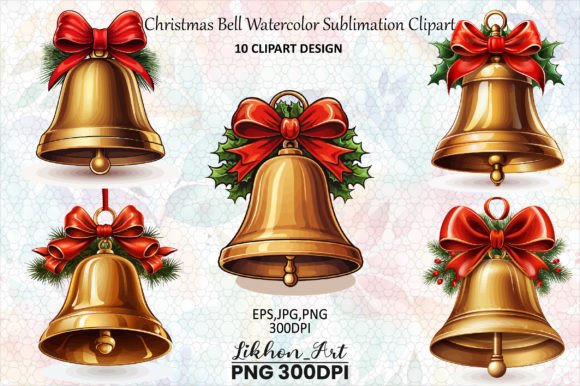
Review: 10 Christmas Bell Sublimation Clipart for Embroidery
As an embroidery designer who spends more time staring at stitch simulations than I do sleeping, I approach new digital assets with a healthy dose of skepticism. We have all been there: you download a bundle that looks crisp on the screen, only to find it turns into a tangled mess of thread breaks and puckering once it hits the hoop. That is why I took a close, practical look at the 10 Christmas Bell Sublimation Clipart set. While the title suggests these are strictly for sublimation printing, many of us in the craft community know that high-quality vector-style illustrations often serve as the perfect foundation for creating custom machine embroidery designs or hybrid mixed-media projects.
First Impressions: Mood and Visual Personality
The moment I opened the files, the first thing that struck me was the clarity of the lines. In the world of Illustrations, especially those themed around holidays, there is a fine line between charmingly detailed and overly complex. These bells strike a nice balance. They evoke a classic, nostalgic holiday mood without relying on cluttered backgrounds or excessive ornamentation that would nightmare any digitizer. The shapes are distinct, with a visual personality that feels both traditional and clean. For a designer, this is gold. It means the core structure is solid, allowing for easier translation into satin stitches or fill stitches if you decide to digitize them yourself or use them as a reference for applique work.
Real-World Application: From Screen to Stitch
To truly test the viability of these assets, I imagined a real-life scenario: preparing a custom order for a boutique client who wanted a set of matching holiday tote bags. The client requested something elegant but festive, avoiding the cartoonish look that plagues so much seasonal merchandise. Here is how the 10 Christmas Bell Sublimation Clipart fits into that workflow.
If you are using these images as a base for a machine embroidery design, the clear outlines make it easy to trace and convert. I visualized using one of the simpler bell shapes for a sweatshirt embroidery project. Because the design lacks tiny, fragile details, it holds up well when scaled down for a left-chest logo or scaled up for a full-back statement piece. The lack of intricate shading in the source image is actually a benefit here; it forces you to rely on thread color changes and stitch direction to create depth, which results in a more professional, textured finished product.
For those who prefer mixed media, these cliparts are ideal for creating printed patches that are then embroidered over. You could print the bell onto fabric using sublimation, cut it out, and secure it with a tight satin stitch border. This technique works beautifully for embroidered patch creation, giving you the photographic quality of print with the tactile appeal of embroidery. It is a smart workaround for designers who want complex visuals without dealing with thousands of stitches.
Where Caution is Needed
However, not every project is a perfect match. If you are planning to use these designs on stretchy fabric like jersey knits or thin materials like silk, you need to be careful. The bold lines of the bells, if digitized with high stitch density, can cause pulling or distortion. I would advise against using the most detailed versions of these bells on caps or curved surfaces unless you significantly simplify the design. The curvature of a hat combined with dense stitching can lead to registration issues where the threads do not lay flat.
Additionally, if you are working with dark fabric, remember that sublimation prints do not show up well on dark backgrounds unless you use a white underbase or transfer paper. If you are converting these into pure embroidery, ensure you have enough contrast in your thread colors. A red bell on a navy sweatshirt needs a bright outline or a lighter fill to pop. Always test your design on scrap fabric first. This simple step saves you from ruining expensive garments and helps you determine the right stabilizer weight. For heavier items like tote bags, a cut-away stabilizer might be overkill, but for lightweight tea towels, it is essential to prevent puckering.
Enhancing Product Value and Brand Consistency
Why does the quality of your source image matter? Because it directly impacts customer trust. When an Etsy seller or small shop owner uses crisp, well-defined assets like the 10 Christmas Bell Sublimation Clipart, the resulting handmade product looks intentional and polished. Sloppy, pixelated, or overly complex designs can make a brand look amateurish. By choosing clean design assets, you elevate the perceived value of your personalized gift items.
These bells are versatile enough to fit into various niches. They work for baby embroidery if you soften the colors and use pastel threads. They are perfect for kitchen towel sets when paired with simple running stitch accents. For commercial embroidery projects, such as corporate holiday gifts, the professional look of these bells ensures that your branding remains consistent and high-end. Buyers engage more with products that look clean and readable from a distance, and these designs deliver that clarity.
Practical Designer Notes for Best Results
Before you rush to list these in your shop or start stitching, here are a few practical tips to ensure success:
- Check Licensing: Always confirm whether the digital embroidery file or clipart license allows for commercial use. Some artists permit selling finished physical items but restrict the sale of the digital file itself.
- Test Contrast: Use black and white mockups to see if the design holds its shape without color. If it looks muddy in grayscale, it might be too detailed for small hoop sizes.
- Review Stitch Density: If digitizing, keep the density moderate. High density leads to stiff fabrics and thread breaks, especially on appliqué design borders.
- Hoop Size Matters: Ensure the design fits comfortably within your hoop with room for stabilization. Do not crowd the edges.
- Fabric Texture: Consider how the fabric texture interacts with the stitch type. A satin stitch looks luxurious on twill but may sink into fluffy fleece.
In conclusion, the 10 Christmas Bell Sublimation Clipart set is a strong contender for your holiday design toolkit. It offers the flexibility needed for both direct printing and embroidery adaptation. By understanding its strengths and limitations, you can create custom apparel and small shop products that stand out in a crowded market. Whether you are making a single holiday embroidery gift for a friend or stocking up for the seasonal rush, these illustrations provide a solid, professional foundation for your creative work.